 (281) 242-1061
  Schedule Consultation
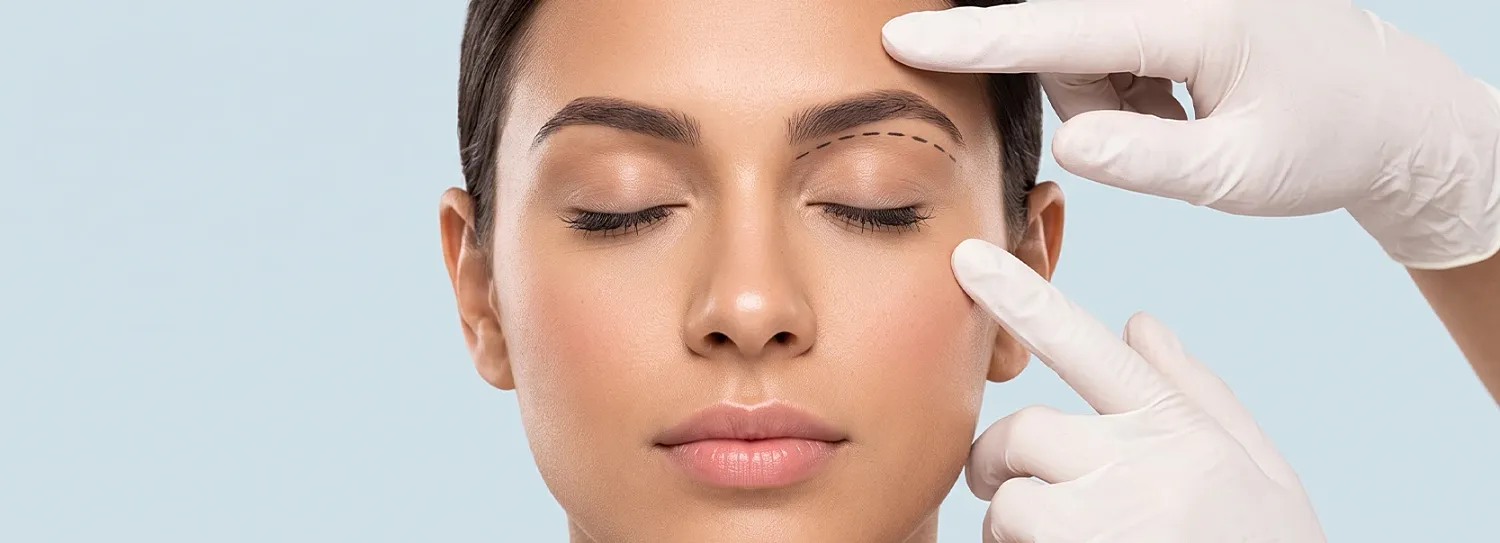
Dr. Mathew L. Moreno is an aesthetic surgery fellow with six years of comprehensive integrated plastic surgery training at the University of Kansas Medical Center, including Chief Resident experience in a cosmetic clinic. Upper eyelid surgery, or upper blepharoplasty, can be performed safely in appropriately selected patients, but potential risks include bleeding, infection, dry or irritated eyes, temporary vision changes, difficulty closing the eyelids, asymmetry, scarring, and the possibility of revision surgery.
Upper eyelid surgery is designed to improve heaviness, hooding, excess skin, and loss of eyelid definition while preserving natural expression and eyelid function. Some patients seek surgery because aging has made the eyes look tired or less open, while others have naturally fuller upper eyelids and want a cleaner crease without an overcorrected appearance.
Because the eyelids are thin, mobile, and closely connected with eye comfort and blinking, even small surgical changes can have a noticeable effect. The safest plan is usually one that removes only the tissue truly contributing to the concern while preserving enough skin and soft tissue for comfortable closure, healthy eye-surface function, and a natural contour.
Dr. Moreno approaches upper eyelid rejuvenation with an emphasis on restoration rather than transformation. His goal is not to create a tight, hollow, or dramatically altered eyelid. Instead, treatment is planned around the individual patient's anatomy so that excess tissue can be addressed while preserving natural softness, eyelid function, and facial identity.
Upper eyelid surgery is generally considered safe for appropriately selected patients when it is planned carefully around eyelid anatomy, eye health, and medical history. However, blepharoplasty carries risks including bleeding, infection, dry eye symptoms, temporary vision changes, difficulty closing the eyes, asymmetry, scarring, and rarely more serious eye-related complications.
Many changes that occur during the first days or weeks are normal parts of healing rather than complications. Patients should understand which symptoms are expected and which should be reported promptly.
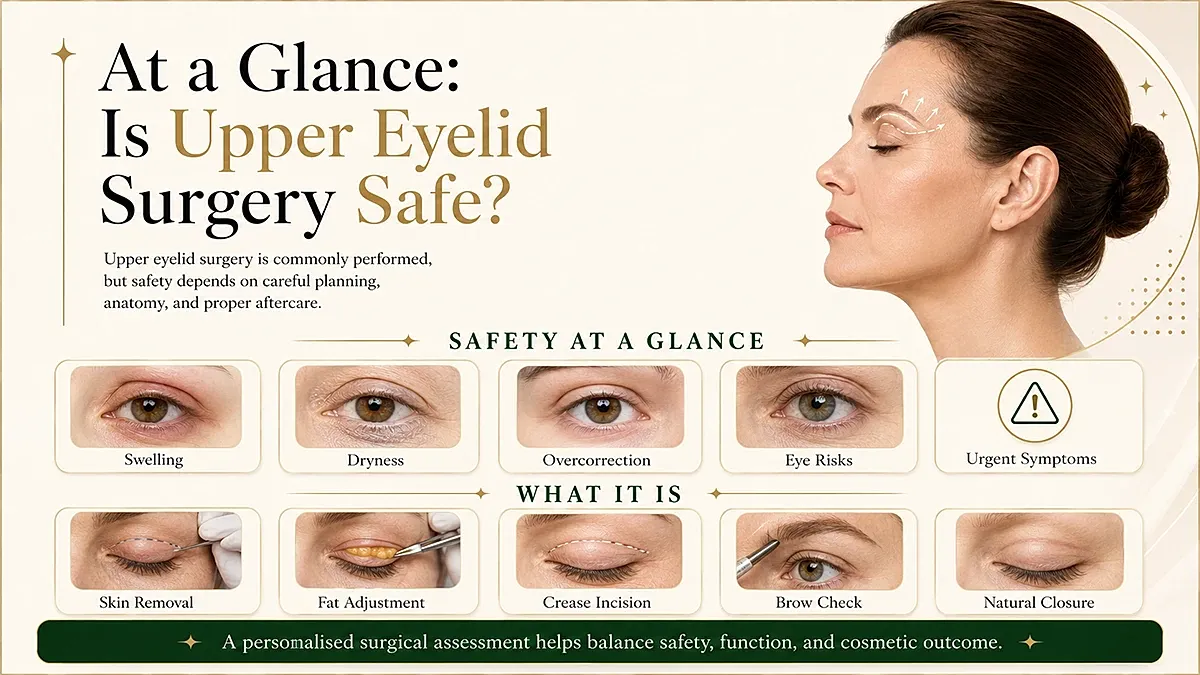
Upper eyelid surgery, also called upper blepharoplasty, removes or repositions selected excess tissue from the upper eyelid to create a cleaner, more rested contour. The procedure may be performed for cosmetic reasons, functional concerns, or a combination of both.
Upper blepharoplasty is not simply a matter of removing as much skin as possible. The procedure works best when the surgical plan respects the relationship between the eyelid, brow, eye surface, and surrounding facial anatomy.

Upper eyelid surgery is generally well tolerated in healthy patients who are carefully evaluated before surgery. Safety depends on eye health, medical history, medications, tissue quality, surgical technique, and whether the patient can follow postoperative instructions.
No cosmetic procedure is completely risk-free, even when it is commonly performed. A thorough consultation helps determine whether the expected benefit justifies the surgical risk for the individual patient.
Common early concerns after upper blepharoplasty include swelling, bruising, tightness, irritation, temporary numbness, tearing, and mild asymmetry. Many of these changes are expected during healing and improve gradually rather than representing a true complication.
The appearance during the first days or weeks should not be considered the final result. The eyelids need time to soften, settle, and regain a more natural appearance.
More serious complications are uncommon, but they are important to understand because some require prompt treatment. These may involve significant bleeding, infection, eye exposure, persistent eyelid-position problems, visual complications, or the need for corrective surgery.
Anesthesia-related complications are also possible depending on the surgical setting and medications used. Patients should understand that rare does not mean impossible, which is why warning signs and emergency instructions are discussed before surgery.
Upper eyelid surgery can temporarily affect visual clarity because swelling, ointment, dryness, and bruising may change how the eyes feel or focus during early recovery. Temporary blurred vision can occur, but sudden or severe vision loss is not considered a normal part of healing.
Most mild visual changes improve as swelling and irritation resolve. Severe eye pain, rapidly worsening pressure, or a sudden change in vision should be treated as urgent symptoms rather than routine postoperative discomfort.

Upper blepharoplasty can temporarily worsen dryness or create scratchy, burning, watery, or irritated eyes while the eyelids heal. Patients who already have dry eye symptoms may need additional evaluation because surgery can temporarily affect blinking and tear-film stability.
Pre-existing dry eye does not automatically rule out upper eyelid surgery. It does mean the surgical plan should be conservative and the patient’s eye comfort should be considered carefully before proceeding.
Temporary difficulty fully closing the eyes can occur because swelling and tissue tightness may temporarily affect eyelid movement. Persistent inability to close the eyelids is more concerning because it can expose the eye surface and contribute to dryness or irritation.
This is one reason aggressive skin removal is not necessarily better. A natural-looking eyelid should also function comfortably when blinking, resting, and sleeping.
Hollowing or an overcorrected appearance can occur when too much skin, fat, or soft tissue is removed from the upper eyelid. Conservative surgery helps preserve natural fullness and reduces the risk of creating a tight, skeletal, or overly operated appearance.
Dr. Moreno’s philosophy favors restraint and proportion around the eyes. The aim is to create a refreshed appearance while preserving the softness and individual character of the patient’s eyelids.
Mild asymmetry can occur after upper blepharoplasty because the two eyes are rarely identical before surgery and may also heal at different speeds. Early swelling can exaggerate differences in crease height, eyelid openness, bruising, or skin tension.
Perfect symmetry is not a realistic surgical goal because human faces are naturally asymmetric. The goal is improved balance while preserving a natural appearance.
Upper blepharoplasty scars are generally positioned within the natural upper eyelid crease so they can become less noticeable as they mature. Scar appearance varies according to incision placement, genetics, skin quality, tension, pigmentation, and postoperative care.
The thin skin of the eyelid often heals discreetly, but no incision is completely scar-free. Patients should allow time for the scar to soften and fade before judging its final appearance.

A good candidate is generally a healthy adult bothered by upper eyelid hooding, heaviness, excess skin, or loss of crease definition and who has realistic expectations about the result. Eye health, brow position, medical history, and healing ability are also important parts of candidacy.
Not every patient with heavy-looking upper eyelids needs blepharoplasty alone. In some cases, brow position or another anatomical factor contributes more strongly to the appearance and should be addressed during planning.

Some patients require additional precautions because eye conditions, medications, medical problems, previous surgery, or lifestyle factors can increase the chance of complications. These concerns do not always rule out treatment, but they may require further evaluation or modification of the plan.
Patients should provide a complete medical, medication, and eye-health history during consultation. Safe eyelid surgery depends on identifying important risk factors before the procedure rather than discovering them during recovery.
Dr. Moreno helps reduce upper eyelid surgery risks through careful patient selection, conservative tissue removal, precise incision planning, and close attention to eyelid function. His six years of integrated plastic surgery training at the University of Kansas Medical Center, including Chief Resident experience in a cosmetic clinic, provide a strong foundation for evaluating eyelid anatomy and planning aesthetic procedures thoughtfully.
Dr. Moreno is also currently completing an Aesthetic Surgery Fellowship at Aristocrat Plastic Surgery and serves as a Clinical Assistant Professor of Surgery at SUNY Downstate Health Sciences University. No surgical technique can eliminate complications completely, but careful planning, conservative execution, and attentive follow-up can help reduce avoidable risk.
Patients can support safer surgery by sharing a complete medical and eye-health history and following all preoperative instructions carefully. Preparation matters because medications, nicotine exposure, uncontrolled medical conditions, and untreated eye symptoms can affect bleeding, healing, and eye comfort.
Patients should not stop prescription medications on their own unless instructed by the appropriate medical provider. Clear communication before surgery helps the team identify risks that might otherwise be missed.

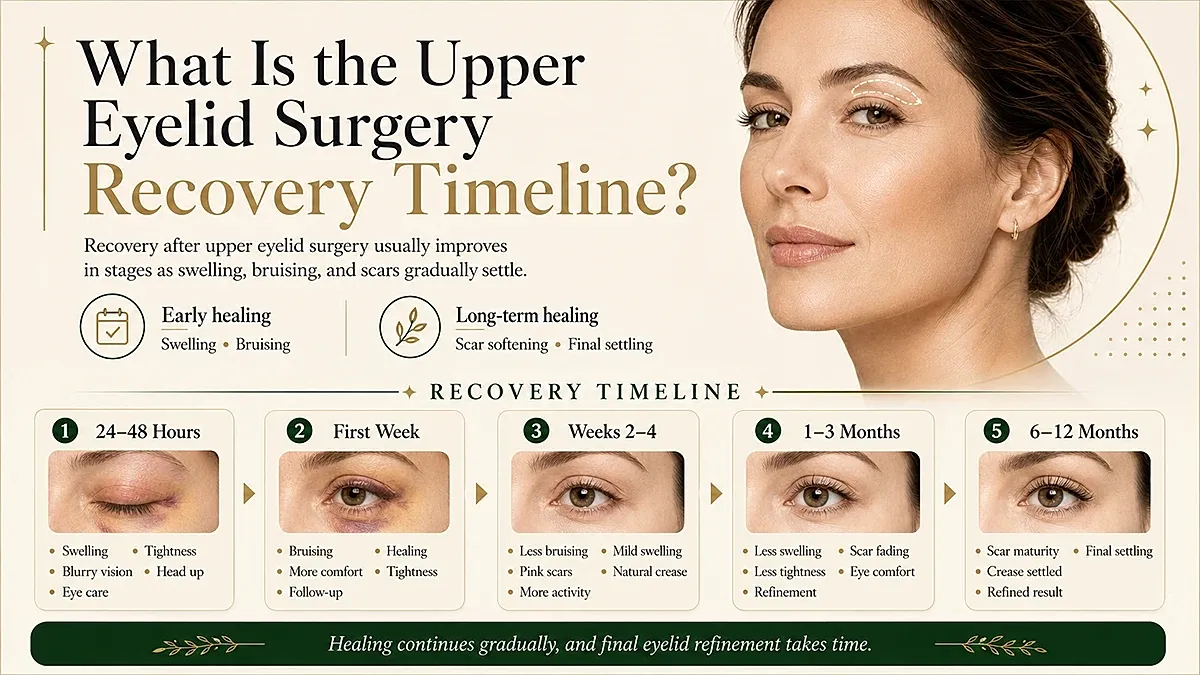
Upper eyelid surgery recovery usually involves temporary swelling, bruising, tightness, incision redness, and changes in eye comfort. Most patients improve steadily over the first few weeks, although scar maturation and subtle tissue settling continue for several months.
Patients often feel socially presentable before the eyelids are fully healed. The final result should be judged after swelling has decreased and the crease has had time to settle.
Upper blepharoplasty recovery progresses gradually as swelling and bruising improve and the incisions mature. The exact timeline varies according to anatomy, healing response, procedure extent, and whether other facial procedures are performed at the same time.
First 24 to 48 Hours
First Week
Weeks Two to Four
One to Three Months
Six to Twelve Months
Recovery should not be rushed simply because the eyelids look better. Internal healing continues after the visible bruising has faded.
Swelling and bruising can look uneven because the eyelids are thin, delicate, and responsive to small differences in fluid retention and healing. One side may temporarily look more open, puffy, or bruised than the other even when both are progressing normally.
Mild asymmetry during early recovery is common. Sudden severe swelling, significant pain, or a dramatic one-sided change should be reported promptly.
Most early recovery symptoms are temporary, but certain changes require prompt evaluation because the eyes are sensitive structures. Patients should contact the surgical team when symptoms become sudden, severe, progressively worse, or clearly different from the expected recovery pattern.
Contact the Surgical Team Promptly for:
Seek Urgent or Emergency Medical Attention for:
It is better to report a concerning change early than wait for it to become more severe. Prompt communication helps distinguish expected healing from a complication.

Upper eyelids usually begin to look more natural as swelling decreases, bruising fades, and the eyelid crease softens. Many patients notice meaningful improvement within a few weeks, but final refinement can continue for several months.
Patients should avoid judging the final result too early. The eyes often look progressively more natural as the tissues relax and scars mature.
Upper eyelid surgery can provide long-lasting improvement, but it does not stop the natural aging process. Removed excess skin does not simply grow back, although brow descent, skin aging, and tissue changes can influence the eyelid appearance over time.
Results vary from patient to patient and should not be reduced to one guaranteed number of years. Many patients continue to look more refreshed than they would have without surgery even as natural aging continues.
Alternatives may be appropriate when eyelid concerns are mild, when brow descent is the main issue, or when a patient does not want surgery. The best option depends on whether the concern involves excess skin, brow position, wrinkles, skin quality, or facial volume.
Nonsurgical treatments may improve selected concerns but cannot remove meaningful excess upper eyelid skin. A consultation helps determine whether surgery or another treatment better matches the anatomy.
Nonsurgical treatments can improve skin quality, fine lines, or mild laxity, but they generally cannot reproduce the degree of tissue removal and contour change achieved with upper eyelid surgery. Their role is often best suited to early aging or patients who are not ready for surgery.
Patients should be cautious of claims that a nonsurgical treatment offers the same result as blepharoplasty. The appropriate option depends on the specific cause of the heavy or hooded appearance.

Upper eyelid surgery may be worthwhile for patients who are bothered by hooding, heaviness, excess skin, or loss of eyelid definition and who understand the risks and recovery. The decision should be based on whether the expected improvement is meaningful enough to justify surgery for that individual patient.
The best candidates want a refreshed appearance rather than a dramatic change in identity. A thoughtful consultation helps determine whether the expected benefits align with the patient’s goals.
Upper eyelid surgery is generally well tolerated in appropriately selected patients, but it is not risk-free. Potential concerns include bleeding, infection, dry eye symptoms, temporary vision changes, difficulty closing the eyes, asymmetry, scarring, and rare serious eye-related complications.
The safest upper eyelid surgery plan is not necessarily the most aggressive one. Appropriate patient selection, conservative planning, careful technique, and attentive aftercare help balance aesthetic improvement with eyelid function and eye comfort.
Tightness can happen because swelling and incision healing temporarily limit how soft the eyelids feel. This usually improves as swelling decreases and the eyelid crease relaxes.
Yes, one eyelid can look more open because swelling, bruising, and tissue tightness may improve at different speeds. Mild unevenness is common early, but sudden changes or worsening symptoms should be reported.
Watery eyes can happen when dryness, swelling, or temporary irritation affects the tear film. This often improves as the eyelids heal and blinking feels more normal.
Hollowing can happen if too much tissue is removed, which is why conservative planning matters. Dr. Moreno’s approach focuses on refreshing the eyelids while preserving natural softness.
A scar can look pink during the active healing phase even when it is placed carefully in the eyelid crease. It usually fades gradually as the scar softens and matures.
Yes, makeup can irritate healing eyelid incisions if it is used too early. Patients should wait until Dr. Moreno clears them before applying makeup near the incision lines.
Morning swelling can temporarily make the eyelids look puffier, tighter, or more uneven. Eyelid results should be judged after swelling has settled over time, not during early daily fluctuations.
Dr. Mathew L. Moreno brings a strong background in integrated plastic surgery, aesthetic surgery, academic medicine, and clinical research to facial rejuvenation. He completed six years of integrated plastic surgery residency training at the University of Kansas Medical Center, including Chief Resident experience in a cosmetic clinic where he performed aesthetic procedures under attending oversight.
His professional background includes:
Dr. Moreno’s approach to eyelid rejuvenation emphasizes careful anatomical assessment, conservative tissue management, natural-looking results, and preservation of eyelid function. Surgical recommendations are individualized according to the patient’s eyelid anatomy, brow position, eye health, and aesthetic goals.
A private consultation is the appropriate setting to determine whether upper blepharoplasty is suited to your anatomy, eye health, brow position, medical history, and aesthetic goals. The discussion should include expected improvement, potential risks, alternatives, scar placement, recovery, and whether another procedure may better address the underlying concern.
Patients considering upper eyelid surgery with Dr. Moreno can use the consultation to discuss what specifically makes their eyes appear heavy or tired and whether surgery can address that concern without producing an overcorrected result.
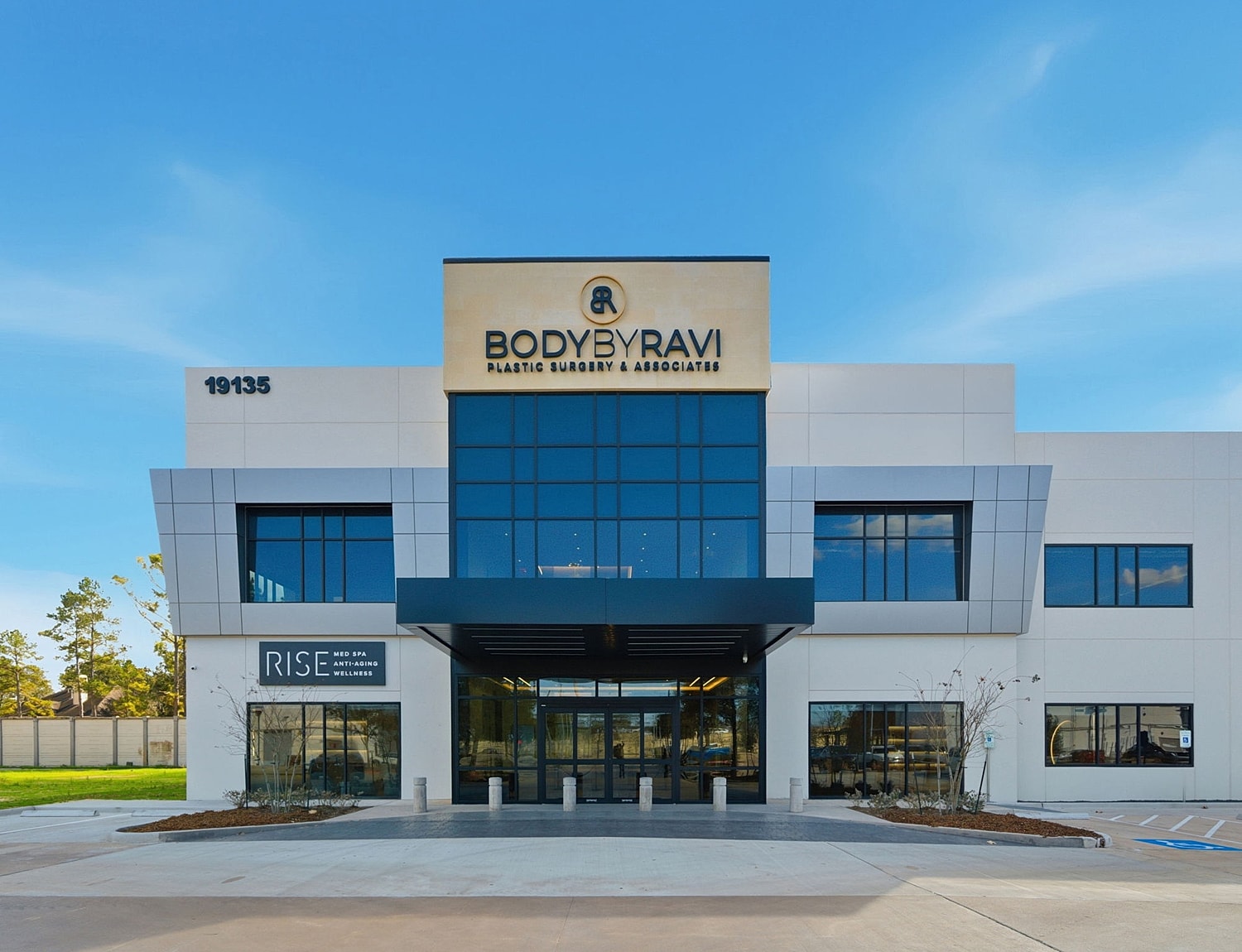
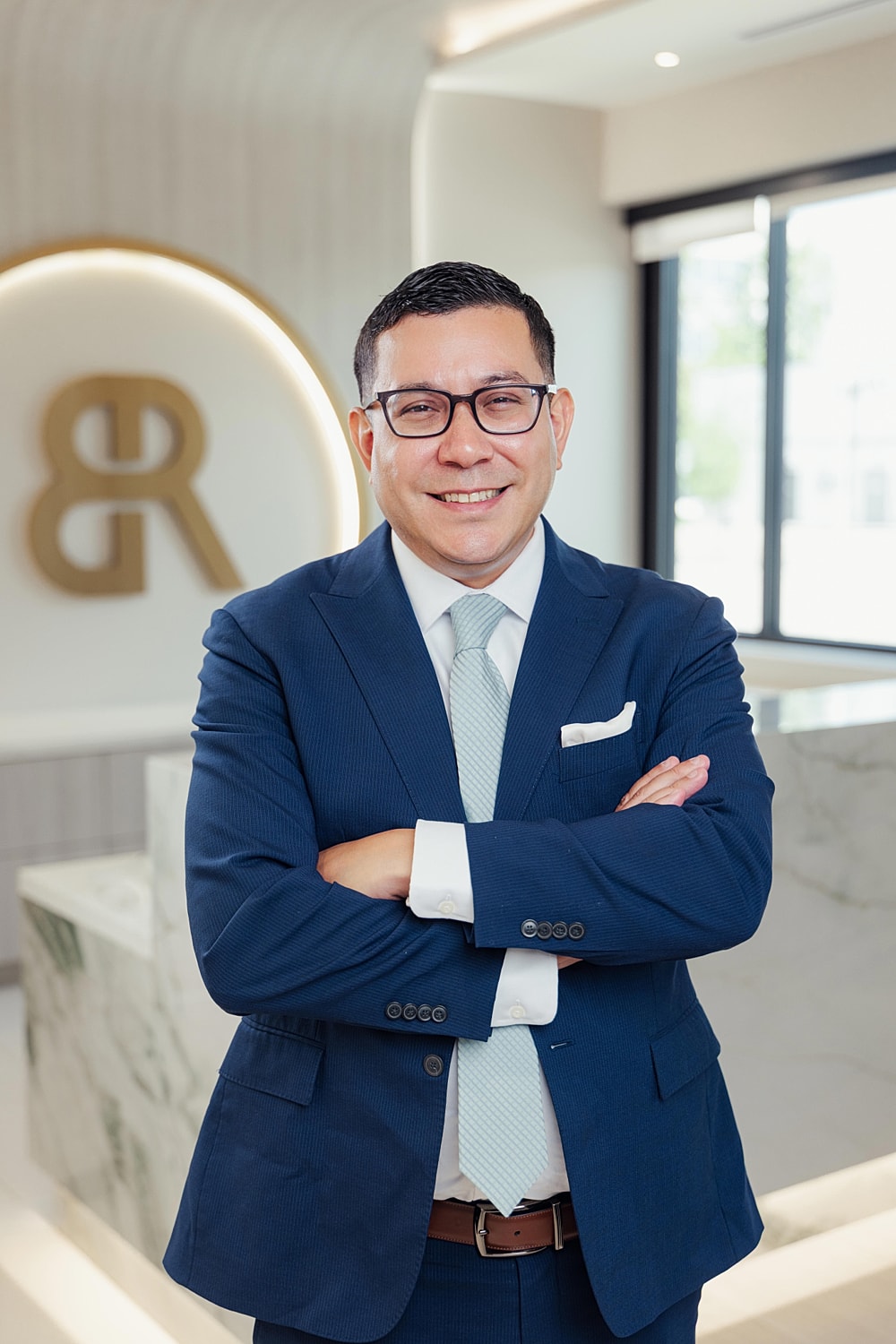
Schedule a consultation with Dr. Moreno at Body by Ravi Plastic Surgery & Associates in Houston, TX, to explore a personalized upper eyelid rejuvenation plan. The goal is to help you make a clear, informed decision about whether surgery offers the right balance of improvement, safety, and recovery for you.