 (281) 242-1061
  Schedule Consultation
Breast augmentation recovery is often easier and more comfortable than many women expect. Understanding the healing process before surgery can help reduce anxiety and make recovery feel far more predictable. At Body by Ravi Plastic Surgery & Associates in Houston, TX, Dr. Ravi combines advanced surgical techniques, personalized care, and Rapid Recovery Breast Augmentation protocols to help patients heal safely and confidently.
Women choose breast augmentation for many different reasons. Some were born with naturally small breasts and have dreamed of enhancing their shape for years, while others want to restore volume lost after pregnancy, breastfeeding, weight loss, or aging. Regardless of the reason, recovery is an important part of achieving a beautiful, long-lasting result.
Dr. Ravi believes breast augmentation should create a balanced, natural-looking enhancement that complements a woman's body rather than overpowering it. Careful implant selection, precise surgical planning, and comprehensive recovery guidance all contribute to a smoother healing experience. Most patients are pleasantly surprised by how quickly they begin feeling like themselves again.
Most breast augmentation patients return to light daily activities within several days, while complete healing and implant settling occur gradually over several months. Although everyone heals differently, recovery generally follows a predictable pattern that allows patients to plan ahead with confidence.
The first phase of recovery focuses on managing swelling, tightness, and temporary activity restrictions. During this time, the body begins adapting to the implants while the surgical tissues heal beneath the surface. Many patients feel significantly better by the end of the first week.
The second phase involves gradually returning to work, exercise, and normal routines. As swelling continues to improve and implants settle into position, the breasts begin looking and feeling more natural. Most patients enjoy ongoing improvements in breast softness, shape, and contour for several months after surgery.
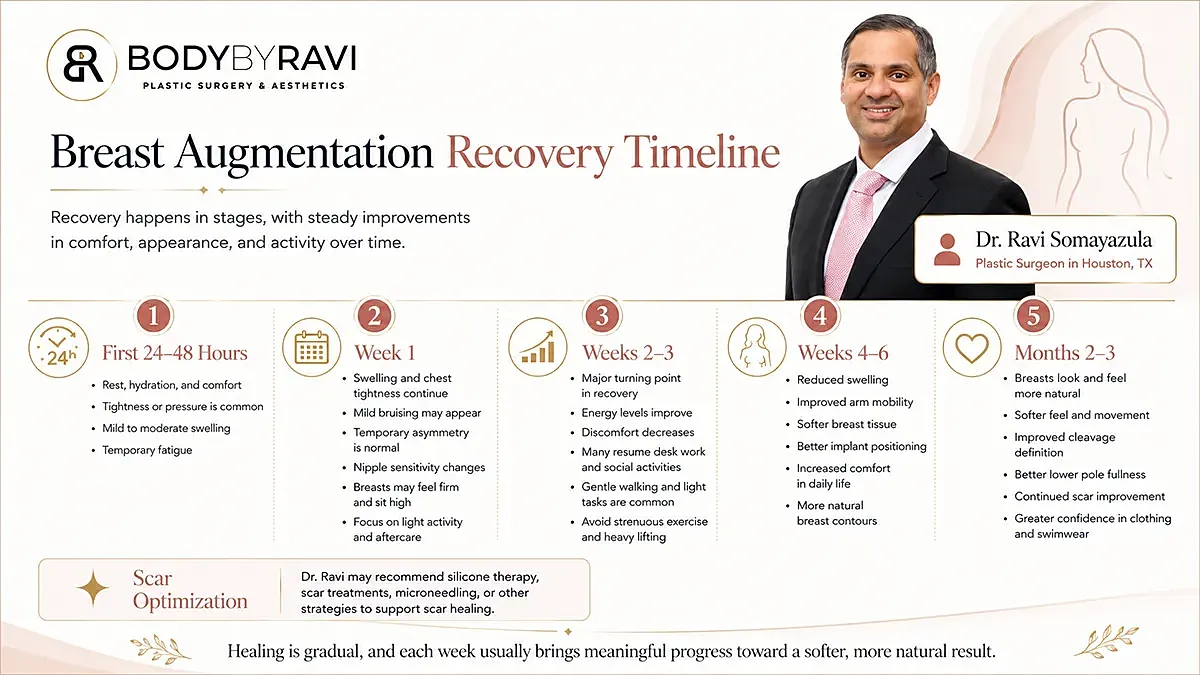
A typical breast augmentation recovery timeline includes:
While recovery milestones are helpful guidelines, every patient's experience is unique. Factors such as implant placement, implant size, anatomy, activity level, and individual healing tendencies can all influence the timeline.
Dr. Ravi's Rapid Recovery Breast Augmentation is designed to help patients experience less discomfort, minimize downtime, and return to normal life more quickly. Rather than relying on a single technique, this approach combines thoughtful surgical planning, meticulous operative technique, and enhanced recovery protocols that support healing from the very beginning.
Key components of Rapid Recovery Breast Augmentation may include:
Dr. Ravi carefully measures each patient's breast anatomy before recommending implant size and profile. This tissue-based planning process helps create natural-looking results while reducing unnecessary tension on the tissues and supporting a more predictable recovery.
His operating team includes a board-certified anesthesiologist, experienced nurses, and a highly skilled first assist with years of plastic surgery expertise. Together, they work in unison to create a safe, efficient, and highly coordinated surgical experience that supports both outstanding results and a smoother recovery.
Breast augmentation recovery occurs gradually over several stages, with each phase bringing noticeable improvements in comfort, appearance, and activity level. While healing is a process, most patients find recovery progresses steadily and becomes easier with each passing week.
✓ First 24-48 Hours After Breast Augmentation
The first two days after surgery are focused on rest, hydration, comfort, and allowing the body to begin healing. Tightness and pressure are usually more common than significant pain, and many patients are surprised by how manageable recovery feels.
During the first 24-48 hours, patients commonly experience:
Patients are encouraged to take short walks throughout the day to support circulation and reduce stiffness. While many women feel relatively well early on, it is important to remember that internal healing is still just beginning.
✓ Week 1 After Breast Augmentation
The first week is often characterized by improved comfort but persistent swelling and tightness. The breasts may appear higher, firmer, or more swollen than expected, which is completely normal during this stage of healing.
Common Week 1 symptoms include:
Most patients spend this week focusing on light activity, proper hydration, and following postoperative instructions carefully. By the end of the week, many women feel much more comfortable performing routine daily tasks.
✓ Weeks 2-3 After Breast Augmentation
Weeks two and three often represent a major turning point in recovery. Energy levels improve, discomfort decreases significantly, and patients begin appreciating their early breast enhancement while understanding that further changes are still ahead.
Many patients resume:
Patients should continue avoiding strenuous exercise, heavy lifting, and intense upper-body activity during this period. Although they often feel much better physically, the implants and surrounding tissues are still healing internally.
✓ Weeks 4-6 After Breast Augmentation
By weeks four through six, most patients feel substantially recovered and notice meaningful improvements in breast shape and softness. Activity restrictions may begin easing depending on implant placement and individual healing progress.
Patients may notice:
This stage can feel exciting because the breasts begin looking closer to the final result. However, continued patience is important because implant settling and tissue remodeling are still ongoing.
✓ Months 2-3 After Breast Augmentation
By the second and third months, the breasts typically look and feel significantly more natural. Swelling becomes increasingly subtle, and the implants continue settling into their long-term position.
Patients commonly notice:
This is also an important period for scar optimization and long-term healing support. Dr. Ravi may recommend silicone therapy, scar treatments, microneedling, or other scar optimization strategies to help scars mature as favorably as possible.
The "drop and fluff" process refers to the gradual settling and softening of breast implants after surgery. While many patients worry when their implants initially sit high on the chest, this is a completely normal part of healing and usually improves over time.
During the drop and fluff process, patients commonly notice:
The timeline varies from patient to patient depending on implant size, tissue characteristics, skin elasticity, and implant placement. Patients with dual-plane or submuscular implants often experience a longer settling period because the chest muscle must gradually relax around the implant.
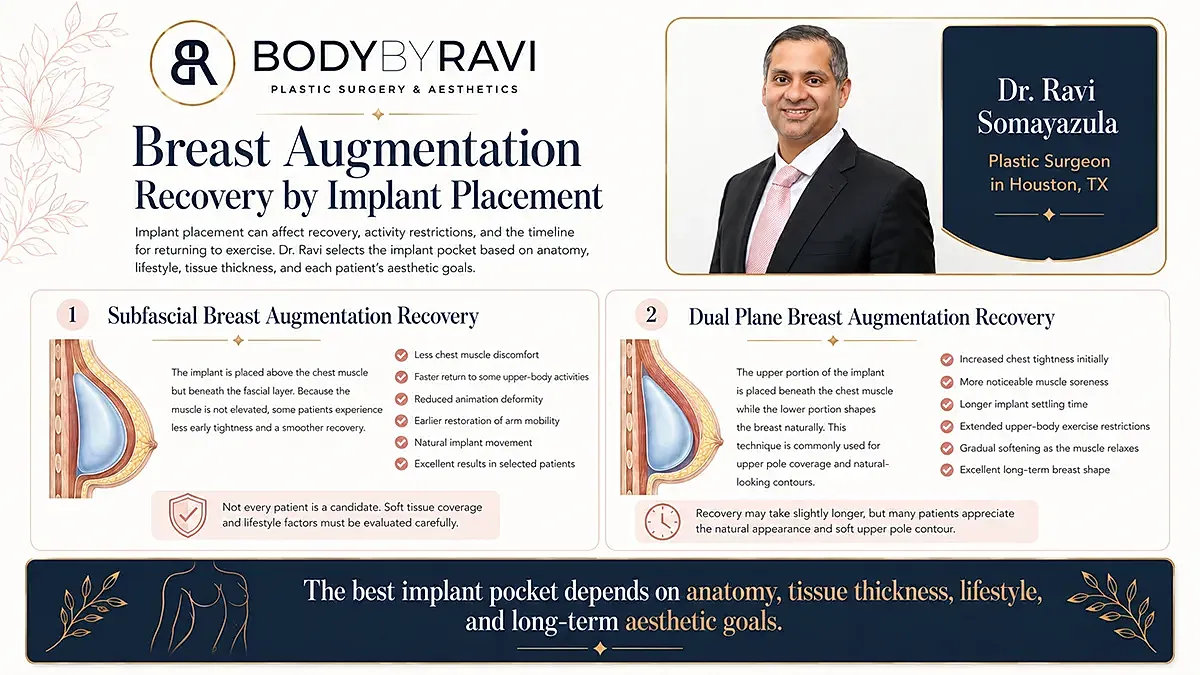
Implant placement plays an important role in recovery, activity restrictions, and the timeline for returning to exercise. Dr. Ravi carefully selects the implant pocket based on anatomy, lifestyle, tissue thickness, and the aesthetic goals of each patient.
✓ Subfascial Breast Augmentation Recovery
Subfascial breast augmentation places the implant above the chest muscle but beneath the fascial layer covering the muscle. Because the muscle itself is not elevated, some patients experience less early tightness and a smoother recovery.
Patients with subfascial placement may experience:
Not every patient is a candidate for subfascial placement. Dr. Ravi carefully evaluates soft tissue coverage and lifestyle factors before recommending this approach.
✓ Dual Plane Breast Augmentation Recovery
Dual plane breast augmentation places the upper portion of the implant beneath the chest muscle while allowing the lower portion to shape the breast naturally. This technique is commonly used because it provides excellent upper pole coverage and natural-looking contours.
Patients with dual-plane placement may experience:
Although recovery may take slightly longer, many patients appreciate the natural appearance and soft upper pole contour achieved with dual-plane placement. Dr. Ravi will recommend the implant pocket that best supports long-term aesthetic success.
Sleeping properly after breast augmentation helps reduce swelling, protect the implants, and improve comfort during the early healing period. Most patients are advised to sleep on their back with their upper body elevated for several weeks after surgery.
During early recovery, patients should:
Many patients find sleeping in a recliner or with supportive pillows especially helpful during the first week. As healing progresses, Dr. Ravi will advise when side sleeping may safely resume.

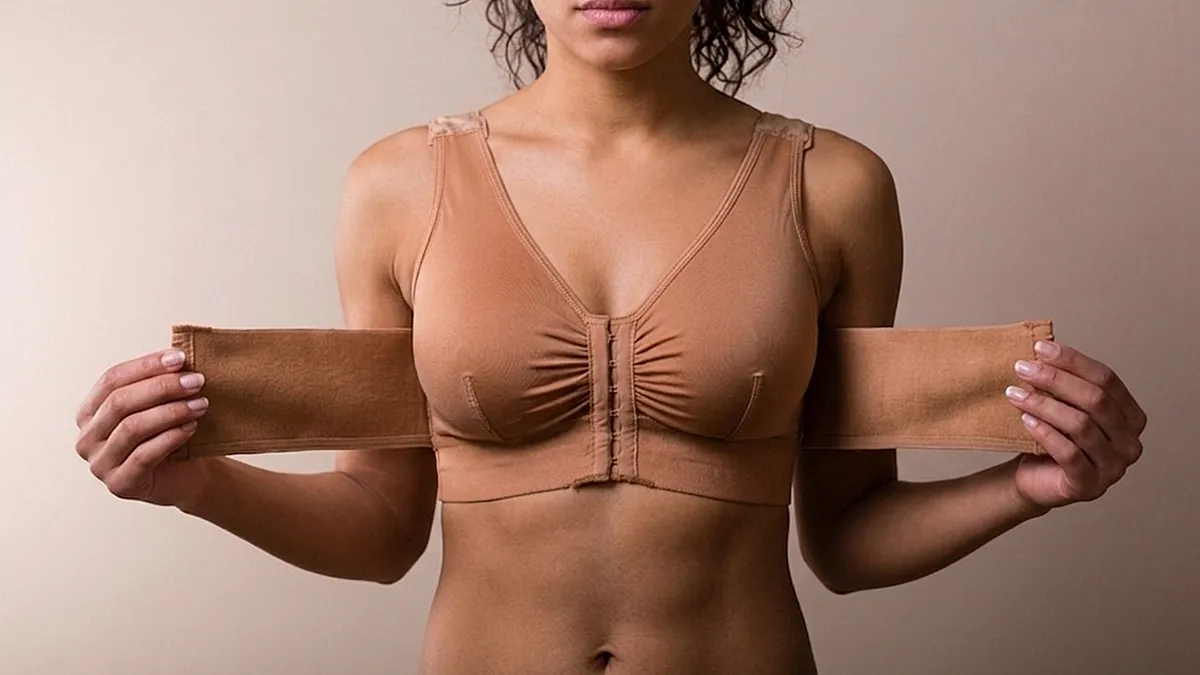
Proper postoperative support can improve comfort and help protect healing tissues during recovery. Most patients wear a surgical bra or supportive compression garment recommended by Dr. Ravi's team.
Postoperative bras are designed to:
Patients should avoid underwire bras until cleared by Dr. Ravi. Wearing the appropriate garment during the early healing phase can contribute to a smoother recovery experience and improved comfort.
Swelling is a normal part of healing and gradually improves as the body recovers. While some swelling may persist for several weeks, there are several steps patients can take to support the healing process.
Helpful ways to minimize swelling include:
Patients should remember that swelling often fluctuates during recovery. Temporary increases in swelling after activity, travel, heat exposure, or poor sleep are common and usually improve with time.
Most patients return to work sooner than they initially expect, although the timeline depends largely on the physical demands of the job. Recovery should always be individualized rather than based on someone else's experience.
Desk Jobs
Many patients with office-based jobs return within several days to one week.
Patients often return to:
Active Jobs
Jobs that require frequent movement or prolonged standing may require additional recovery time.
Examples include:
Physically Demanding Jobs
Jobs involving lifting, pushing, pulling, or strenuous activity often require the longest recovery period.
These may include:
Dr. Ravi provides individualized recommendations based on implant placement, healing progress, and occupational requirements. Returning too soon can increase swelling and discomfort unnecessarily.


Driving may resume once patients can safely operate a vehicle without discomfort or limitation. Patients should also no longer be taking prescription pain medications that could impair reaction time.
Before returning to driving, patients should be able to:
Most patients resume driving relatively quickly, but safety should always take priority over convenience. Dr. Ravi will help determine when driving is appropriate based on individual recovery progress.

Exercise is an important part of recovery, but returning too aggressively can increase swelling and place unnecessary stress on healing tissues. Activity should progress gradually and according to Dr. Ravi's recommendations.
Recovery milestones may include:
Walking
Cardio
Lower Body Exercise
Upper Body Exercise
Weight Training
Although patients often feel physically capable before the tissues are fully healed, patience helps protect the long-term result. Dr. Ravi provides individualized exercise guidelines to balance safety with a timely return to an active lifestyle.
Most breast augmentation patients do not require routine breast massage after surgery. Whether massage is recommended depends on implant type, implant placement, and the specifics of the surgical plan.
Dr. Ravi's approach may include:
Patients should avoid performing breast massage unless specifically instructed to do so. Following the postoperative plan provided by Dr. Ravi helps ensure the safest and most predictable healing process.
Scar quality is influenced by surgical technique, tissue handling, tension management, genetics, and postoperative care. Dr. Ravi incorporates scar optimization into the treatment plan from the very beginning rather than waiting until scars have already formed.
His scar optimization approach may include:
The goal is not simply to hide scars but to help them heal as favorably as possible over time. Most breast augmentation scars continue improving for many months and often become increasingly difficult to notice as they mature.
Most breast augmentation recoveries progress smoothly, but certain mistakes can increase swelling, prolong healing, or affect comfort during recovery. Understanding what to avoid can help patients achieve the best possible outcome.
Common recovery mistakes include:
Many patients begin feeling much better before internal healing is complete. Following Dr. Ravi's recommendations and allowing the body adequate time to recover can help protect both the surgical result and the overall recovery experience.
Most recovery symptoms are normal and improve steadily over time, but certain changes should prompt a call to the office. Dr. Ravi and his team want patients to feel supported throughout recovery and encourage communication whenever concerns arise.
Patients should contact the office if they experience:
It is always better to ask questions than to worry at home. Prompt communication allows concerns to be evaluated quickly and provides patients with additional peace of mind throughout recovery.
Breast augmentation is about more than simply increasing breast size. It requires careful planning, an artistic understanding of proportion, and a commitment to creating results that look natural and complement each patient's unique anatomy.
Patients choose Dr. Ravi because of his personalized approach, attention to detail, and focus on long-term satisfaction. His goal is not to follow trends but to help women achieve balanced, proportionate results that enhance confidence while maintaining a natural appearance.
Patients appreciate:
At Body by Ravi Plastic Surgery & Associates, every patient receives individualized care designed to optimize both the surgical result and the overall experience. From consultation through recovery, Dr. Ravi and his team are committed to helping patients feel informed, supported, and confident throughout their journey.
The best way to determine whether breast augmentation is right for you is through a personalized consultation with Dr. Ravi. During your consultation, he carefully evaluates your anatomy, discusses your goals, performs tissue-based measurements, and develops a customized surgical plan tailored specifically to your needs.
Whether you are seeking fuller breasts, improved balance, restoration of lost volume, or a lifelong enhancement you have always wanted, breast augmentation can create meaningful improvements in shape, proportion, and confidence. Dr. Ravi and his team are committed to providing exceptional care, beautiful natural-looking results, and comprehensive support every step of the way.
If you are considering breast augmentation in Houston, TX, contact Body by Ravi Plastic Surgery & Associates to schedule your consultation and begin your journey toward a more confident you.
Most patients describe breast augmentation recovery as more uncomfortable than painful. Tightness, pressure, and chest soreness are typically more common than severe pain, and discomfort is usually well controlled with modern pain management protocols.
Most swelling improves significantly within the first several weeks. Subtle swelling can continue resolving for several months as the implants settle and the tissues adapt to their new shape.
Most patients are advised to sleep on their back during the early healing period. Dr. Ravi will provide personalized guidance regarding when side sleeping may safely resume based on healing progress and implant placement.
Walking is encouraged immediately after surgery, while more strenuous exercise is introduced gradually. Cardio often resumes around three weeks, while upper-body exercise restrictions may vary depending on implant placement and recovery progress.
Temporary changes in nipple sensation are common after breast augmentation. Some patients experience increased sensitivity, while others experience temporary numbness. In most cases, sensation improves gradually as healing continues.
High-riding implants are a normal part of early recovery. Swelling and tissue tightness initially hold the implants in a higher position before they gradually settle into a more natural location.
Temporary asymmetry is common during healing because each breast can swell and settle at slightly different rates. This usually improves as recovery progresses and the implants continue settling.
Most patients see significant improvement within the first few months, but final refinement can continue for six months to a year. Implant settling, tissue softening, and scar maturation all contribute to the final result.
Not necessarily. Dr. Ravi does not routinely recommend breast massage for every patient and will provide individualized instructions if massage is appropriate for your specific situation.
All surgical procedures create scars, but breast augmentation incisions are carefully planned to be as discreet as possible. With proper healing and scar optimization protocols, most scars continue improving and fading over time.